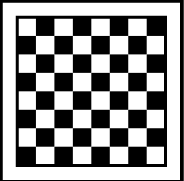
The Chessboard: A Reflection of Life’s Complexities and Dualities
Chess: A Reflection of Humanity’s Complex Tapestry
Since its inception, chess has transcended mere entertainment, evolving into a profound metaphor for the human experience. With its geometric precision and contrasting colors, the game encapsulates the dualities that define our existence: order versus chaos, light versus shadow, and freedom versus destiny. As players engage in this ancient contest, they are not just strategizing; they are participating in a structured unfolding of life itself.
Across civilizations—from ancient China to medieval Europe—chess has been revered as a microcosm of the cosmos. The 64 squares of the board symbolize completeness, echoing the balance of forces that shape our lives. Much like a silent mandala, it invites players to reflect on the deeper meanings behind each move.
One of the game’s most illustrious figures, Paul Morphy, emerged in the 19th century, captivating audiences with his remarkable ability to outmaneuver the best players of his time. His brief yet impactful career serves as a testament to chess as both a sport and an art form, where creativity and calculation intertwine.
When the opposing armies of black and white face off, the encounter transcends mere competition. It becomes a dialogue of complementary principles, where neither side holds moral superiority. The essence of chess lies not solely in victory but in the management of tension and the maintenance of balance amid conflict.
Each chess piece embodies unique characteristics: the rook represents stability, the bishop offers indirect vision, and the knight introduces unexpected moves that disrupt patterns. The queen, with her expansive range, and the king, the vulnerable center of the game, together create a dynamic interplay that reflects the complexities of life.
Every match unfolds like a narrative, with openings signaling new beginnings, middlegames showcasing confrontation, and endgames offering resolution. As brilliant minds clash over the board, they reveal not just tactical prowess but also a form of artistic expression.
Historically, thinkers have recognized chess as a pathway to self-understanding. In India, the game of Chaturanga symbolized balance, while Sufi philosophers viewed the board as a means to explore the inner self. Each move became a step toward greater awareness.
In modern times, chess has been framed as a sport, yet its deeper significance remains intact. The romantic players of the 19th century, such as Anderssen and Steinitz, approached the game with a sense of invention, while 20th-century writers like Zweig and Nabokov saw it as a metaphor for inner conflict and the intensity of thought.
Contemporary science draws parallels between chess and complex physical systems, where each move can alter the entire landscape, much like the unpredictable nature of life itself. A single misstep can reshape outcomes, underscoring the importance of foresight and responsibility.
Ultimately, chess offers more than just a reflection of the universe; it imparts vital lessons about living within it. The board presents choices, encouraging players to navigate complexity with care. Winning is not merely about overpowering an opponent but about understanding the nuances of each situation.
In a world often fraught with uncertainty, chess provides a sense of orientation. It reminds us that meaning can emerge from chaos and that even on a simple wooden board, profound questions about existence can arise. Every pawn holds potential, and every move is a quiet search for balance in the intricate dance of life.